Health Supplements 101: How to Choose Wisely
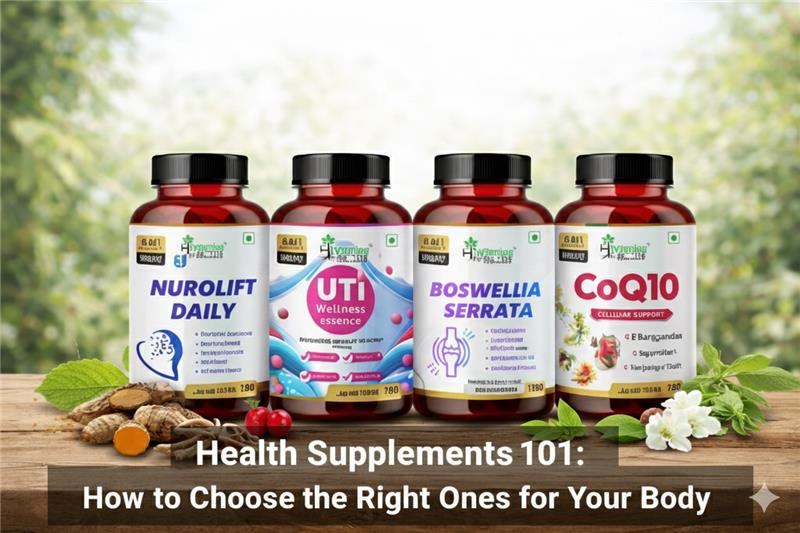
Key takeaways - Food, sleep, movement and stress care come first. Supplements add to them. - Your needs depend on age, diet, activity and health history. A professional can help you sort that out. - Read serving size, ingredient amounts and "other ingredients" before you buy. - Start with one product, follow the label and keep notes. - Ask your doctor first if you take medicine, are pregnant or nursing, or have a medical condition.
The best way to choose a health supplement is to know your own routine, read the label closely and start small. Not every supplement suits every person, and more bottles do not mean better habits. This guide covers the basics in plain language.
Start with your own needs
Walk into any store or browse online and you will see hundreds of bottles. Before you add anything to your cart, ask what your daily routine already gives you.
Your needs depend on things like:
- Your age and life stage
- What you usually eat
- How active you are
- Medicines you take
- Your health history
A person who trains six days a week and a person who sits at a desk all day may have very different eating patterns. That is why a one-size-fits-all list does not work.
Ask a professional, not just a search bar
A healthcare provider can look at the full picture and, if it makes sense, order blood work. That gives you real information instead of guesses. Online symptom lists cannot tell you what your body needs.
The main types of supplements
Vitamins and minerals
These are the basics, such as vitamin D, B vitamins and magnesium. People often use them to fill small gaps in their diet. Magnesium, for example, contributes to normal muscle and nerve function. If you like a chelated option, see our Magnesium Complex or Magnesium Glycinate.
Herbal and botanical products
Herbs have a long history in traditional wellness practices. Examples include turmeric, ashwagandha, echinacea and moringa. Plant products vary a lot in strength and quality, so label detail matters. Our Echinacea Plus and Moringa 6-in-1 are examples of multi-ingredient plant formulas that support the body's natural defenses.
Digestive wellness products
Some people add products with probiotics or fiber-type ingredients to support digestive wellness. If you try one, look for clear strain names and amounts on the label. Our Sodium Butyrate Plus includes a 100mg probiotic blend (10 billion CFU) along with prebiotic inulin to support digestive wellness.
Targeted formulas
Some formulas combine several ingredients around one theme, such as antioxidant support or healthy aging. Match the formula to a goal you can describe in one sentence. Do not take something because it is trending.
How to judge quality
Read the "Supplement Facts" panel
Look at the serving size, the amount of each ingredient and the "other ingredients." Check how many capsules make a serving. A bottle that looks like a month's supply may last half that time if the serving is two or three capsules.
Watch for proprietary blends
A "proprietary blend" lists a total weight but not the amount of each ingredient. That makes it hard to compare products.
Look at the company
You should be able to find the company name, contact details and a clear list of ingredients.
Know what outside seals mean
Some independent programs, such as NSF International and USP, offer voluntary testing seals. A seal can be a helpful extra signal. A missing seal does not by itself mean a product is poor. If a brand names a seal, check the program's own website to confirm it.
Pick simple extras
Scan the "other ingredients" for things you want to avoid, such as certain colors or allergens.
Timing and combining supplements
Morning or evening
Some people prefer to take energizing-type products earlier in the day and relaxing-type products in the evening. Follow the label, and ask your pharmacist if you are unsure.
With food or without
Fat-soluble vitamins are usually taken with a meal that contains some fat. Other products may be better on an empty stomach or with food. The label is your first guide.
Watch for overlap
Some nutrients compete for absorption, and some products contain the same ingredient. For example, two products can both contain magnesium or zinc, which adds up. If you take several products, ask your pharmacist or doctor to check the combination.
Red flags when you shop
Be careful with products or sellers that:
- Promise to cure serious diseases, such as a bottle that "cures cancer" or "melts fat overnight"
- Hide the maker's contact details
- Do not list full ingredient amounts
- Show only reviews and no ingredient list
- Sell at prices that seem too low to be real
If a claim sounds too good to be true, it probably is. Supplements are not medicines and cannot cure or treat diseases.
Build a simple routine
- Start with one product. If you add several at once, you cannot tell what is working for you.
- Follow the label. Do not take more than the directions say.
- Keep notes. Write down how you feel after a few weeks.
- Review. Decide with your healthcare provider if it still fits.
Supplements are one small part of a healthy routine. Food, sleep, movement and stress care do the heavy lifting.
Talk to your healthcare provider
Talk to your healthcare provider, especially if you are pregnant, nursing, take medication or have a medical condition. Some supplements can interact with prescription medicines, affect lab results or be unsuitable before surgery. Tell every provider about every supplement you take. Stop use and seek medical advice if you have an unwanted reaction. Keep all supplements out of reach of children.
The bottom line
Choose with your eyes open: know your routine, read the label, check the company and start small. You can browse the Humming Herbs range at myhummingherbs.com and compare each label for yourself.
Frequently asked questions
How do I know if I need a supplement?
Start with your diet and lifestyle, then talk to a healthcare provider. A doctor can order blood work if it makes sense. Guessing from symptoms alone is not reliable.
How long should I try a supplement before judging it?
Many people give a product several weeks of steady use and keep simple notes. Always follow label directions, and stop if you have a reaction.
Should I take supplements with food?
It depends on the product. Fat-soluble vitamins (A, D, E, K) are usually taken with a meal that has some fat. Always follow the label.
What are red flags when buying supplements?
Promises to cure serious diseases, no company contact details, missing ingredient amounts, and prices that seem too good to be true.
Can supplements interact with medicines?
Yes, some can. Ask your doctor or pharmacist before combining supplements with prescription or over-the-counter medicines.
These statements have not been evaluated by the Food and Drug Administration. This product is not intended to diagnose, treat, cure, or prevent any disease.
Comments (0)